How to Lower Pool Alkalinity for Clear Water Fast
Maintaining a swimming pool involves more than just keeping the water clear and blue—it requires careful chemical balance. One issue that many pool owners encounter is elevated alkalinity. Signs such as cloudy water, buildup on pool surfaces, or difficulty maintaining proper chlorine levels often point to an imbalance in alkalinity.
But don’t worry—you’re not alone. In this article, we’ll walk you step by step through how to lower alkalinity in pool water, why it matters, what tools and chemicals you’ll need, and how to keep your pool in perfect balance all season long.
Whether you’re a new pool owner or an experienced DIYer, this guide will give you practical, easy-to-follow advice to restore your water’s balance and protect your pool investment.

Why Pool Alkalinity Matters
Before diving into how to lower alkalinity in pool water, it’s important to understand what alkalinity is and why it plays such a crucial role.
- Total Alkalinity (TA) is a measure of the amount of alkaline substances (like bicarbonates, carbonates, and hydroxides) in your pool water.
- The recommended range for total alkalinity is 80–120 ppm (parts per million).
- When levels are too high, it can throw your pool chemistry off balance, making chlorine less effective.
Problems Caused by High Alkalinity
If your pool’s alkalinity is too high, you may notice:
- Cloudy or hazy pool water.
- Scaling on the walls, floor, and pool equipment.
- Stubbornly high pH levels that don’t seem to drop.
- Chlorine that doesn’t sanitize effectively.
- Eye and skin irritation for swimmers.
That’s why learning how to lower alkalinity in pool water is essential for safe, clear, and comfortable swimming.
Signs That Your Pool Alkalinity Is Too High
You don’t always need fancy equipment to tell that your pool water isn’t balanced. Some signs are easy to spot.
- Water looks dull or cloudy no matter how much you clean.
- Scaling—white, crusty deposits on tiles, ladders, or filters.
- pH keeps creeping up despite your adjustments.
- Chlorine inefficiency—you add chlorine, but it doesn’t seem to work.
- Skin and eye irritation after swimming.
If you notice these, it’s time to learn how to lower alkalinity in pool water before the problem escalates.
What You’ll Need Before You Begin
Lowering alkalinity isn’t complicated, but it does require the right tools and chemicals. Here’s a checklist to get you started:
Tools & Equipment to Lower Alkalinity in Pool
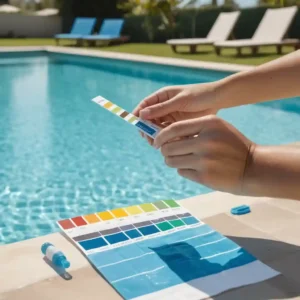
- Pool testing kit (dropper or test strips)
- Pool brush
- Safety gloves and goggles
- Measuring cup or scooper
Chemicals
- Muriatic acid or sodium bisulfate (both are common alkalinity-lowering chemicals)
- Optional: pH reducer (if needed)
Pro Tip: Always handle chemicals with care. Wear protective gear and read labels before adding anything to your pool.
To maintain crystal-clear water while reducing pool alkalinity, it’s crucial to keep chlorine levels balanced.
Try Clorox Pool&Spa XTRABLUE 3 – they kill bacteria, stop algae, and keep your pool water silky smooth.
This article contains affiliate links. If you click on one and make a purchase, I may earn a small commission at no extra cost to you. This helps support the site and allows me to continue providing helpful content.Step-by-Step Guide: How to Lower Alkalinity in Pool
Now let’s get to the good part—how to fix the problem.
Step 1: Test Your Pool Water
Before you can fix anything, you need to know your starting point.
- Use test strips or a liquid dropper kit.
- Check the total alkalinity (TA) levels. The ideal range is 80–120 ppm.
- Record the results so you know how much adjustment is needed.
Step 2: Choose the Right Chemical to Lower Alkalinity in Pool
To lower alkalinity, you’ll need an acid. The two most common choices are:
- Muriatic Acid – Effective and affordable, but must be handled carefully.
- Sodium Bisulfate (Dry Acid) – Easier to handle but slightly more expensive.
Both work well for reducing alkalinity levels.
Step 3: Calculate the Amount Needed
The amount of chemical depends on your pool size and the current alkalinity level.
General guideline:
- 1.25 lbs of sodium bisulfate lowers alkalinity by 10 ppm in 10,000 gallons of water.
- 1 quart of muriatic acid lowers alkalinity by 10 ppm in 10,000 gallons.
Always start small—you can add more if needed.
Step 4: Add the Chemical Properly
Here’s the safest way to add acid to your pool:
- Turn off the pool pump.
- Slowly pour the acid into one spot in the deep end of the pool.
- Let it sink to the bottom and spread naturally.
- Avoid pouring near skimmers, returns, or shallow ends.
This method creates a “slug” of acid that lowers alkalinity more effectively.
Step 5: Wait and Retest
- Wait at least 6 hours (or overnight) before retesting your pool.
- Check both alkalinity and pH.
- If alkalinity is still above 120 ppm, repeat the process in small doses.
Step 6: Balance the pH
Sometimes lowering alkalinity can cause the pH to drop too low.
- Ideal pH range: 7.2–7.6.
- If pH is below 7.0, add a pH increaser (soda ash) to bring it back up.
Natural Alternatives: How to Lower Alkalinity in Pool Without Chemicals?
Many pool owners ask if it’s possible to lower alkalinity naturally. The truth is: not really. Unlike raising alkalinity (which can be done with baking soda), lowering it requires acid.
However, you can:
- Use rainwater (naturally acidic) as a small helper.
- Avoid overusing alkaline chemicals.
- Keep your pool covered to prevent evaporation and concentration of minerals.
But for effective results, chemicals like muriatic acid or sodium bisulfate are your best option.
Common Mistakes When Lowering Alkalinity
Even experienced pool owners make mistakes. Here’s what to avoid:
- Adding too much acid at once – This can crash your pH and damage surfaces.
- Not brushing the pool floor – Acid can stain or etch surfaces if left concentrated.
- Skipping the retest – Always check again before swimming.
- Ignoring leaks – A leaky pool makes balancing impossible.
Remember: how to lower alkalinity in pool water safely comes down to patience and precision.
Preventing High Alkalinity in the Future
Once you’ve fixed the problem, prevention is key.
- Test your pool water at least twice a week.
- Avoid overusing products like baking soda.
- Keep your pool covered when not in use.
- Use chemicals in measured amounts, never by guesswork.
- Keep your circulation and filtration system in top condition.
By staying proactive, you’ll rarely need to worry about how to lower alkalinity in pool water again.
Real-Life Example
Let’s say you have a 20,000-gallon pool, and your alkalinity test shows 150 ppm. That means you need to lower it by about 30 ppm.
- Using sodium bisulfate: You’ll need about 7.5 lbs total.
- Add half (3.75 lbs) first, wait 24 hours, retest, and then add the rest if needed.
This slow-and-steady method prevents mistakes and keeps your pool safe.
Final Thoughts: Keeping Your Pool Balanced Year-Round
Learning how to lower alkalinity in pool water is one of the most valuable skills a pool owner can have. High alkalinity doesn’t just affect your water chemistry—it impacts your pool’s appearance, your comfort, and your wallet.
With regular testing, careful chemical use, and the steps outlined in this guide, you’ll always have sparkling, safe water to enjoy.
- Pool Filter Maintenance: How to Keep Your Water Crystal Clear
- Best Swimming Pool Filtration Pump for Your Pool
FAQ : How to Lower Alkalinity in Pool
A good sign that you’re dealing with high alkalinity is having cloudy swimming pool water. Since your pool is too alkaline the best way to correct this problem is by using an acid. For swimming pools we either use muriatic or sodium bisulfate. You can purchase either at any swimming pool and spa store.
If your pool water pH is above 7.8, add an acid such as muriatic acid or sodium bisulfate.
If the pH level is below 7.2, add an alkaline base such as sodium carbonate (soda ash) or sodium bicarbonate (baking soda)
High alkalinity can throw off the balance of your pool’s water, especially its pH levels. Since pH plays a crucial role in how well chlorine works, any imbalance can reduce the chlorine’s ability to disinfect. This means your pool may not stay as clean or safe, as chlorine is responsible for killing bacteria and other harmful microorganisms.
Baking soda, or sodium bicarbonate, has a naturally alkaline pH of around 8. When introduced into your pool water, it increases both the pH level and the total alkalinity, which helps enhance water stability and clarity.
Alkalinity is the measure of water’s ability to resist rapid changes in pH, primarily due to the presence of bicarbonates, carbonates, and hydroxides. While high alkalinity itself doesn’t cause algae, it can create an environment that encourages algae growth by making disinfectants and treatments less effective.
Agricultural Runoff: Fertilizers and other agricultural chemicals can contribute to elevated alkalinity levels in groundwater. Runoff from farms often contains bicarbonates that seep into the water table.5 août 2024
Water pH measures the amount of hydrogen (acid ions) in the water, whereas water alkalinity is a measure of the carbonate and bicarbonate levels in water. Think of carbonates and bicarbonates as dissolved limestone.
Most pool testing kits provide an accurate measurement of alkalinity. For optimal water balance, total alkalinity should ideally fall between 80 ppm and 120 ppm, although levels from 60 ppm up to 180 ppm are still considered acceptable.
- Pool Floats : Amazing Tricks You Need To Know Now

- Pool Filter Sand: Proven Tips for Crystal-Clear Pool Water
- Proven Pool Covers 2025: Unlock a Cleaner, Safer Pool
- How to Lower Pool Alkalinity for Clear Water Fast
- Top 6 Proven Pool Pumps for a Crystal-Clear Pool

- Above Ground Pool Ladders: A Complete Buying Guide for 2025